Car Electronics and Diagnostics (Specialized)
Overview
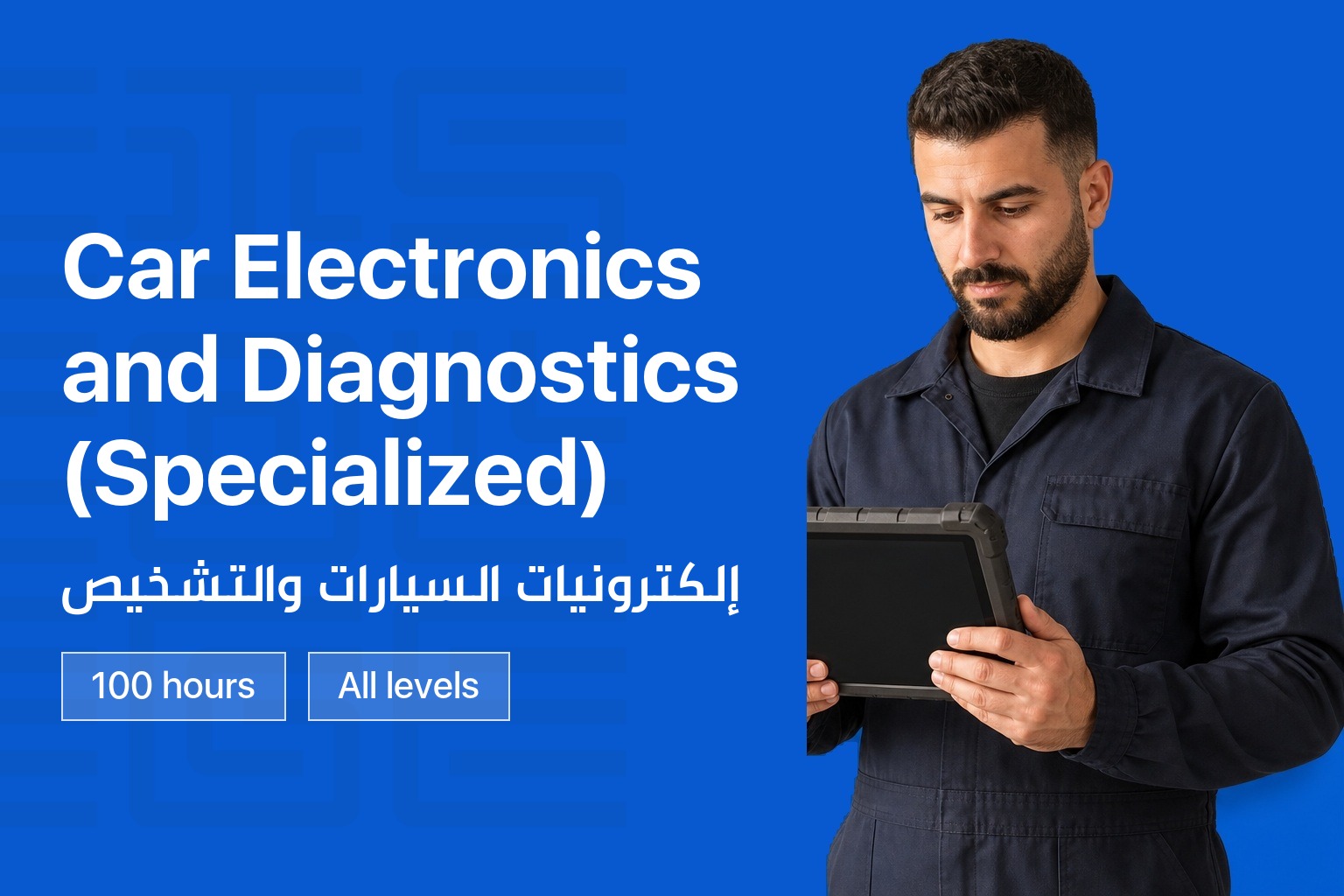
Car Electronics and Diagnostics (Specialized), known in Arabic as Dawrat Elektronik Al-Sayarat Al-Mutakhassisa (دورة الكترونيك السيارات المتخصصة), trains students to become an electromechanic specialist (اخصائي الكتروميكانيك). It is one of the specialized courses in CIS College’s automotive track, meant for students who have completed the Automotive Foundations preparatory course or who already have a working base in the field. Over 100 hours, you move from core electronics principles into the electronic control systems found in modern cars, including injection and ignition systems, sensors and actuators, and finish with hands on training on professional diagnostic tools such as the scanner and the Picoscope.
This course belongs to CIS College’s specialized automotive track, which is made up of a preparatory course followed by specializations in mechanics, electricity, and electronics.
What You Will Learn
- Core electronics principles, including semiconductors and electronic components
- How to apply and test electronic components used in cars
- How electronic control systems work in modern vehicles
- Electronic fuel injection systems and electronic ignition systems
- How sensors and actuators work and how to test them
- How to diagnose car faults using professional tools including the scanner and Picoscope
- How to read and clear diagnostic trouble codes (DTCs), and how to reset and relearn systems after a repair
Course Curriculum
| Module | What you cover | Hours |
|---|---|---|
| Principles of Electronics | Semiconductors, electronic components, and their applications and tests in the car | 15 |
| Electronic Systems in the Car | Introduction to the car’s electronic control system, electronic fuel injection systems, electronic ignition systems, and various electronic control systems in the car | 35 |
| Sensors and Actuators | Types, working principles, and testing of sensors and actuators | 15 |
| Introduction to Fault Diagnosis Systems | Overview of fault diagnosis systems in the car | 10 |
| Diagnostic Tools in Practice | Using diagnostic tools including the Picoscope and the scanner, freeze frame data, reading and clearing DTCs, and reset and relearning procedures | 25 |
Who This Course Is For
- Students who have completed CIS College’s Automotive Foundations course
- Anyone with a base in automotive work who wants to specialize in car electronics and computer diagnostics
Target audiences
- Students continuing from the Automotive Foundations preparatory course
- Career changers specializing in automotive electronics and diagnostics
Requirements
- Completion of the Automotive Foundations course or an equivalent base in automotive electronics recommended
You May Like



Contact us to hear when new training sessions and official majors open for registration.
About us
CIS College delivers practical, career-focused technical and vocational education in Lebanon. We turn hands-on training into real employment outcomes.
Useful Links
Contact us
Follow us