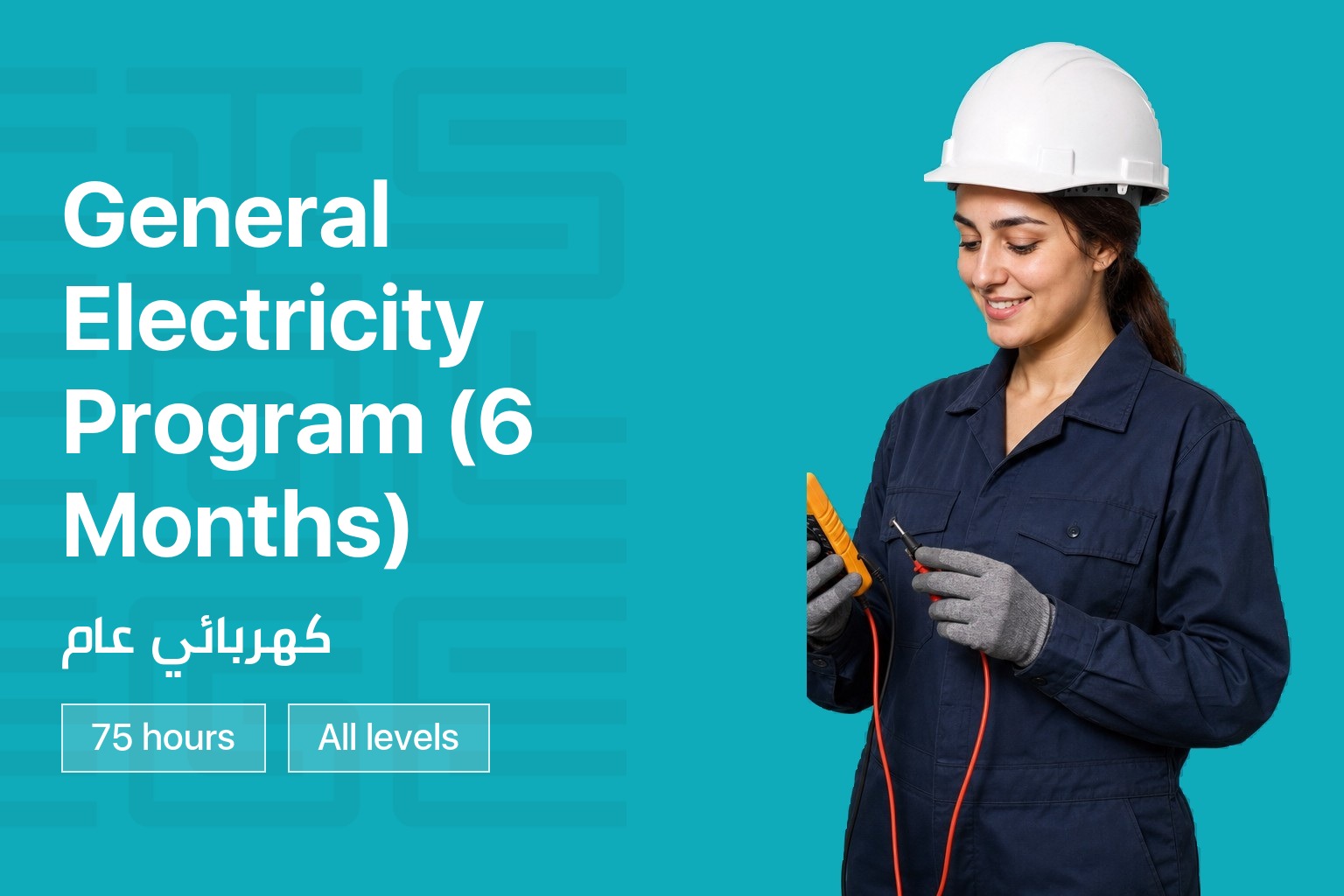
General Electricity Program (6 Months)
Overview
The General Electricity Program, known in Arabic as كهرباء عامة, is CIS College’s full vocational electrician program. It gives you a complete grounding in residential and general electrical installation work, from reading electrical plans and taking measurements, through running conduit and cable, to wiring switches, sockets, and lighting, dividing circuits at the distribution panel, and diagnosing electrical faults. Safety procedures and how to respond to an electrical accident are covered throughout, alongside the coordination required with other professions such as plumbing and finishing work on the same site.
This page describes the full 6-month vocational program: 75 hours of classroom and workshop instruction followed by 3 months of supervised practical training on real job sites, where you apply what you learned under the guidance of skilled technicians. A separate, shorter 40-hour General Electricity course also exists at CIS for students who want a quicker introduction; this page is specifically the complete 6-month program, and the two should not be confused when choosing a path.
What You Will Learn
- How to read electrical plans and identify wiring symbols
- How to measure voltage and amperage, and calculate amperage from wattage
- How to size and install conduit, junction boxes, and cable runs, including in walls and ceilings under construction
- How to fit switches, sockets, and light fittings, and connect them respecting color-coded wiring
- How to divide an apartment’s circuits at the distribution panel, separating lighting from sockets and sizing breakers correctly
- How to assemble a complete distribution panel
- The difference between AC and DC current
- How to detect and diagnose common electrical faults
- How to follow safety and protective procedures and respond correctly if an accident occurs
Course Curriculum
| Module | What you cover |
|---|---|
| Reading Plans and Measurements | Reading electrical layout plans and using measuring tools |
| Electricity Overview | Core electrical concepts through hands-on demonstration |
| Cable and Conduit Sizing | Measuring and sizing cable and conduit correctly |
| Junction Box Sizing | Measuring and sizing electrical junction boxes |
| Electrical Components | Switches, sockets, telephone and TV points, breakers, and dimmers |
| Component Function and Use | The role of each component and how to use it correctly |
| Voltage and Amperage | Measuring voltage and amperage and understanding the difference between them |
| Amperage from Wattage | Calculating amperage based on wattage |
| Site Measurements | Taking accurate dimensions and measurements on site |
| Junction Box Installation | Installing junction boxes in walls and ceilings |
| Conduit Fitting Inside Boxes | Fitting conduit into junction boxes and securing it to the wall |
| Conduit Recessing at Corners | Recessing conduit correctly, especially around corners |
| Wall Thickness Awareness | Accounting for plaster and tile thickness on walls when routing conduit |
| Coordination with the Plumber | Coordinating electrical routing with sanitary work before running conduit |
| Exposed PVC Conduit | Installing exposed PVC conduit with its accessories |
| PVC Conduit Bends | Forming bends in PVC conduit |
| Cable Pulling | Pulling cable through conduit |
| Cable Fill Limits | Knowing how much cable is permitted inside a given conduit |
| Wiring Connections in Boxes | Connecting cable inside junction boxes |
| Separate Circuit Runs | Running each circuit category separately for organization and efficiency |
| Switch Wiring and Color Coding | Connecting switches while respecting color-coded wiring |
| Reading Electrical Drawings | Interpreting symbols and details on electrical drawings |
| Coordination with the Project Designer | Coordinating electrical work with the project’s designer |
| Circuit Division at the Panel | Dividing an apartment’s circuits at the distribution panel and separating lighting from sockets, sizing breakers by load |
| Distribution Panel Assembly | Assembling a complete distribution panel |
| Fault Detection | Detecting electrical faults and identifying their type |
| Safety and Protective Procedures | Safety and protective procedures for yourself and others |
| Accident Response | How to respond correctly if an electrical accident occurs |
| AC vs DC Current | The difference between alternating and direct current |
| Junction Boxes for Cable Grouping | Installing and wiring junction boxes used to group cables |
| Rough-in During Construction | Installing boxes and conduit in ceilings while the building is under construction |
| Protecting Conduit Inside Boxes | Protecting conduit runs inside junction boxes |
| Long-Distance Cable Runs | Running cable and conduit safely over long distances |
Who This Course Is For
- Anyone starting a career as a general electrician
- Career changers looking for a full, practical vocational program rather than a short introduction
- Construction workers wanting to formalize electrical installation skills
Target audiences
- Career changers entering the general electrician profession
- Construction workers formalizing electrical skills
Requirements
- No prior electrical experience required
You May Like

Contact us to hear when new training sessions and official majors open for registration.
About us
CIS College delivers practical, career-focused technical and vocational education in Lebanon. We turn hands-on training into real employment outcomes.
Useful Links
Contact us
Follow us