Health Care Assistant
Overview
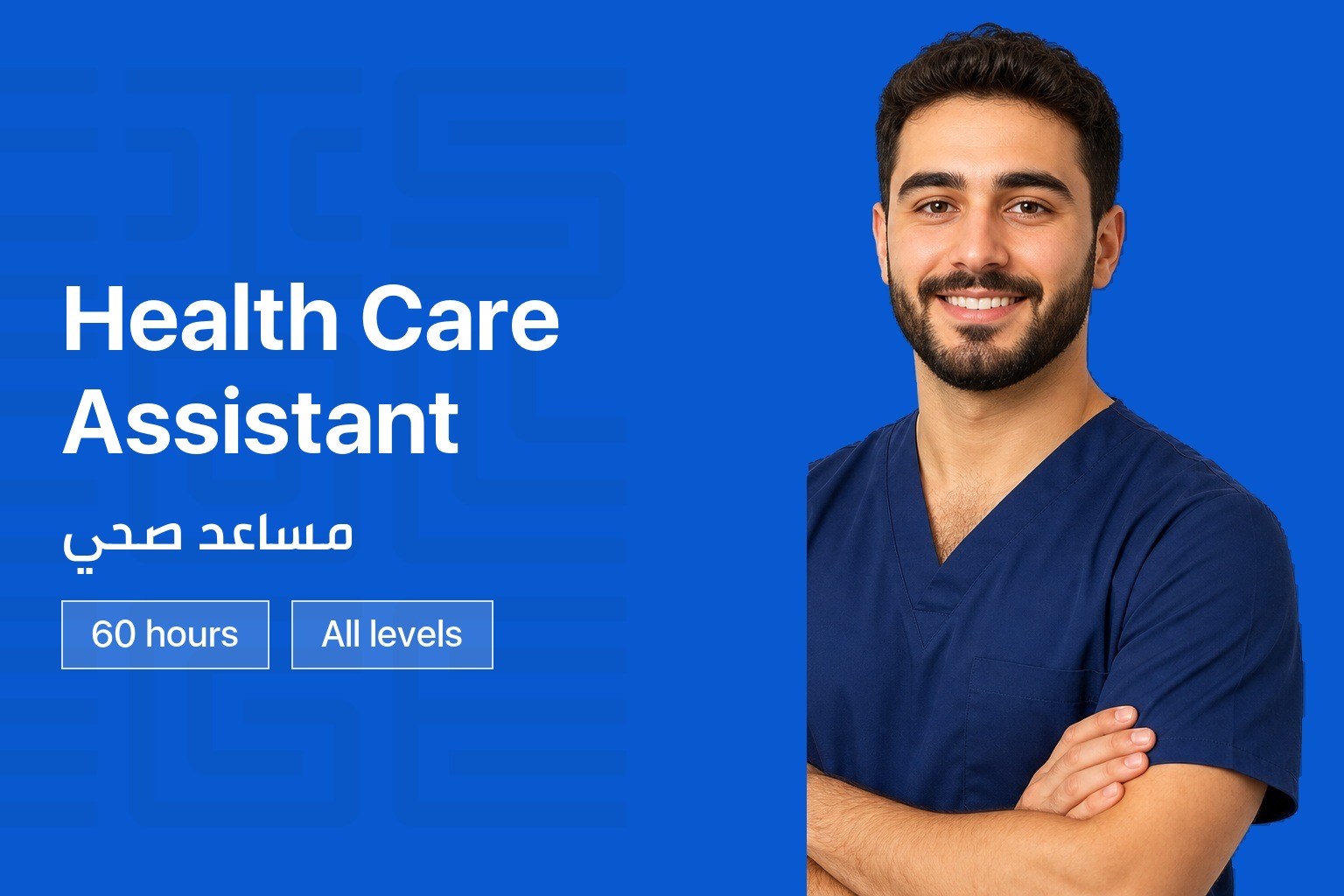
The Health Care Assistant course introduces the fundamentals of healthcare systems and the day-to-day role of a health assistant in a clinic, hospital or health center. Through lectures, hands-on workshops and simulated patient scenarios, you will learn how to support patients safely and professionally, from first contact through daily care, monitoring and emergency response.
The course covers the full scope of the role: professionalism and ethics, infection control and sterilization, direct patient care, recording vital signs, recognizing common conditions, responding to emergencies, and keeping accurate patient records. You will finish with the practical skills and knowledge needed to work as a health assistant in a healthcare setting.
What You Will Learn
- Understand the role, duties and professional standards expected of a health assistant
- Apply infection control, sterilization and hygiene practices correctly
- Assist patients with daily care needs such as dressing, bathing and mobility
- Measure and record vital signs and assist with basic laboratory tests
- Recognize common diseases and body-system conditions and their symptoms
- Respond to emergencies including choking, wounds, burns and cardiac events
- Maintain accurate patient records and support a health center’s daily operations
- Communicate with empathy and cultural sensitivity in patient-centered care
Course Curriculum
| Module | What you cover |
|---|---|
| Introduction to Health Care and the Health Assistant Role | Healthcare systems and medical sciences overview, the health assistant’s duties, patient reception, PPE, work safety and the physical requirements of the role |
| Professionalism and Ethics | Codes of conduct, confidentiality, patient rights and handling ethical dilemmas in healthcare practice |
| Infection Control and Cleanliness | Sterilization and hand hygiene, disinfectant use, and maintaining a clean and safe patient environment |
| Direct Patient Care | Helping patients dress, bathe and manage daily needs, wheelchair transport, and care for bedridden patients |
| Patient Monitoring and Vital Signs | Recording temperature, pulse, blood pressure, respiratory rate and blood oxygen, plus phlebotomy basics |
| Body Systems and Common Conditions | Cardiovascular and digestive system basics, common conditions such as diabetes, angina and thrombosis, and related medical terminology |
| Emergency Response and First Aid | Resuscitation, respiratory distress, choking, wound care, burns and other emergency situations |
| Laboratory Support and Recordkeeping | Assisting with common laboratory tests, maintaining patient records, and supporting a health center’s internal organization |
Who This Course Is For
- Anyone looking to start a career as a health assistant
- Job seekers interested in hospital or clinic support roles
- Anyone wanting hands-on training in patient care
Certification
Graduates who complete the course become eligible for a certificate recognized by Lebanon’s Directorate General of Technical and Vocational Education.
Target audiences
- Individuals looking to start a career as a health assistant
- Job seekers interested in hospital or clinic support roles
- Anyone wanting hands-on training in patient care
Requirements
- No prior healthcare experience required
- Basic reading and writing ability
- Willingness to attend hands-on clinical sessions
You May Like





Contact us to hear when new training sessions and official majors open for registration.
About us
CIS College delivers practical, career-focused technical and vocational education in Lebanon. We turn hands-on training into real employment outcomes.
Useful Links
Contact us
Follow us