Painting Works
Overview
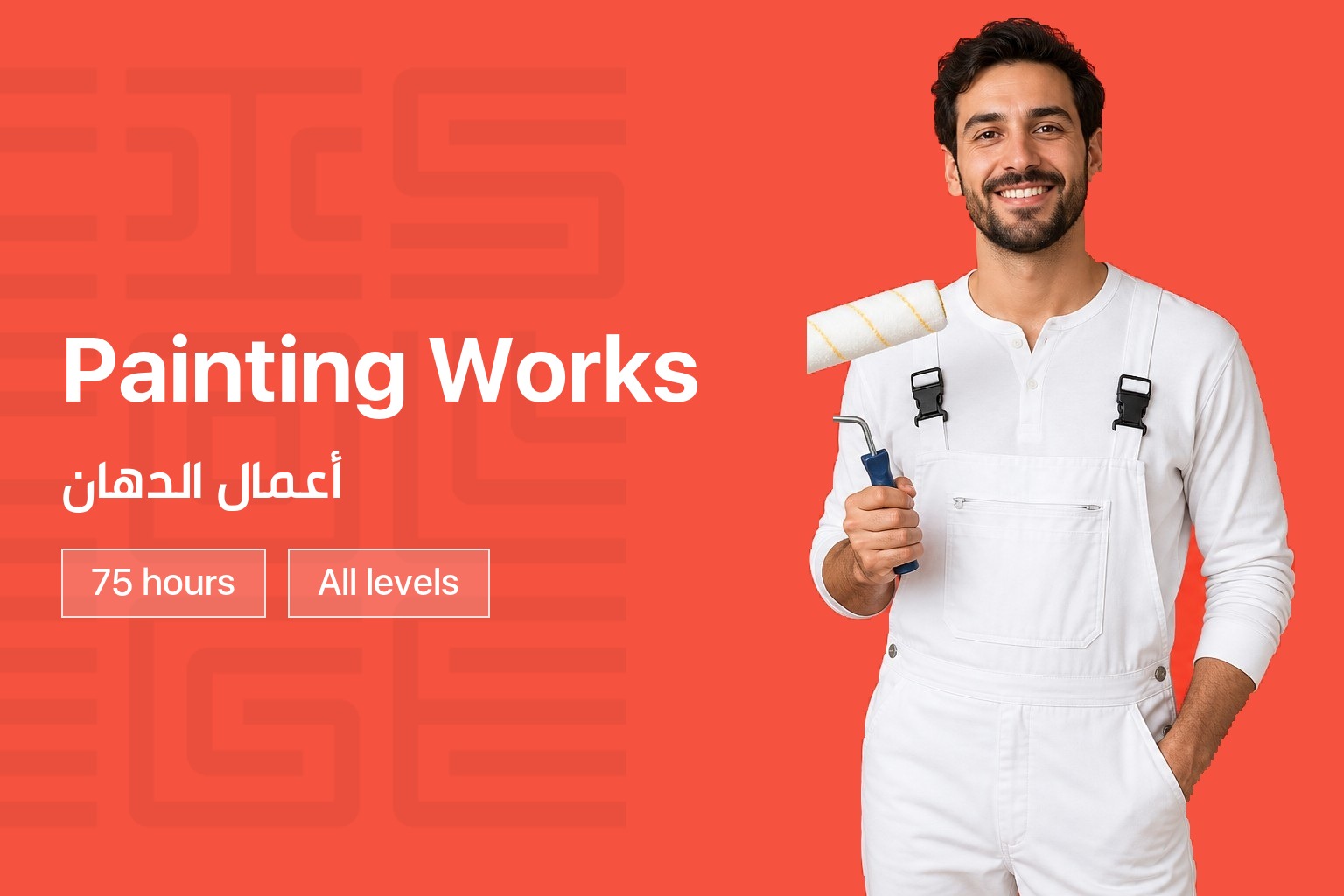
Painting Works, known in Arabic as “أعمال الدهان” (job title: عامل دهان), is a 75-hour course that trains students in essential painting techniques, safety protocols, and the practical use of tools like brushes, rollers, and spray guns. Students learn about different types of paints and finishes, surface preparation, putty application, and working with different surfaces such as gypsum and wood, along with professional conduct and teamwork on site.
This course follows the CIS 6-month program structure: 75 hours of classroom and hands-on instruction over 3 months, followed by a 3-month supervised internship. During the internship, students apply their skills on real painting projects alongside industry professionals, gaining exposure that reinforces their technical skills and prepares them for the painting profession.
What You Will Learn
- Painting techniques including brushing, rolling, and spraying for smooth, even finishes
- The differences between water-based and oil-based paints and where each is used
- Surface preparation, including cleaning, sanding, priming, and correcting imperfections
- Applying putty in multiple layers for a smooth, level, flawless surface
- Correct paint mixing ratios and drying times for consistent results
- Protecting floors, furniture, and fixtures and maintaining a clean, safe worksite
- Identifying and fixing surface defects and completing professional touch-ups
Course Curriculum
| Module | What you cover |
|---|---|
| Overview of Painting Works | Introduction to painting techniques, types of finishes, and industry standards |
| Safety Measurements | Protective gear, safe handling and storage of paints and solvents, and ventilation |
| Types of Paint and Applications | Water-based vs. oil-based paints and suitable uses on walls, ceilings, wood, and metal |
| Primary Stages Before Painting | Cleaning and sanding surfaces, applying primer, and correcting imperfections |
| Inspecting Walls and Surfaces | Checking alignment with laser levels and identifying cracks or moisture issues |
| Smoothing Walls with Stone | Stone polishing techniques to remove rough textures before applying putty |
| Applying Thick Putty | Using trowels for leveling uneven surfaces with multiple corrective layers |
| Stages of Putty Application | Base layer, mid-layer smoothing, and final polished putty coat |
| Primer Coating and Drying Time | Importance of primer for adhesion and standard drying times |
| Touch-Ups and Corrections | Identifying surface defects and spot reapplication of putty or primer |
| Starting the Painting Process | Brush, roller, and spray techniques for smooth coats and large area coverage |
| Number of Coats Required | Assessing coverage per coat and techniques for uniform color and finish |
| Mixing Paint | Correct paint-to-water ratios and mixing techniques for consistency |
| Oil-Based Paint Mixtures | Correct oil-to-paint ratios and safe handling of oil-based solvents |
| Tools and Usage | Types of brushes and rollers, and proper use of spray guns and extension poles |
| Surface Protection | Covering floors, furniture, and fixtures, and masking edges and trims |
| Maintaining Cleanliness | Cleaning tools and surfaces and proper disposal of paint residues |
| Respecting Clients and Colleagues | Professional communication and following site rules and teamwork practices |
| Treating Damp Walls | Identifying causes of dampness and using sealants and moisture-resistant primers |
| Putty for Gypsum Ceilings | Selecting appropriate putty types for gypsum surfaces and seamless application |
| Using Mesh or Paper Tape | Reinforcing joints with mesh to prevent future cracks |
| Preparing Putty Mixtures | Manual mixing techniques and achieving the correct consistency |
| Sanding Putty Surfaces | Sanding techniques and grit selection for a smooth, even finish |
Who This Course Is For
This program is designed for career changers and job seekers who want to become professional painters, building a hands-on skill with real employment potential in the construction sector.
Target audiences
- Career changers seeking entry into the construction industry
- Job seekers interested in painting work
Requirements
- No prior experience required
You May Like





Contact us to hear when new training sessions and official majors open for registration.
About us
CIS College delivers practical, career-focused technical and vocational education in Lebanon. We turn hands-on training into real employment outcomes.
Useful Links
Contact us
Follow us