Solar Energy Systems
Overview
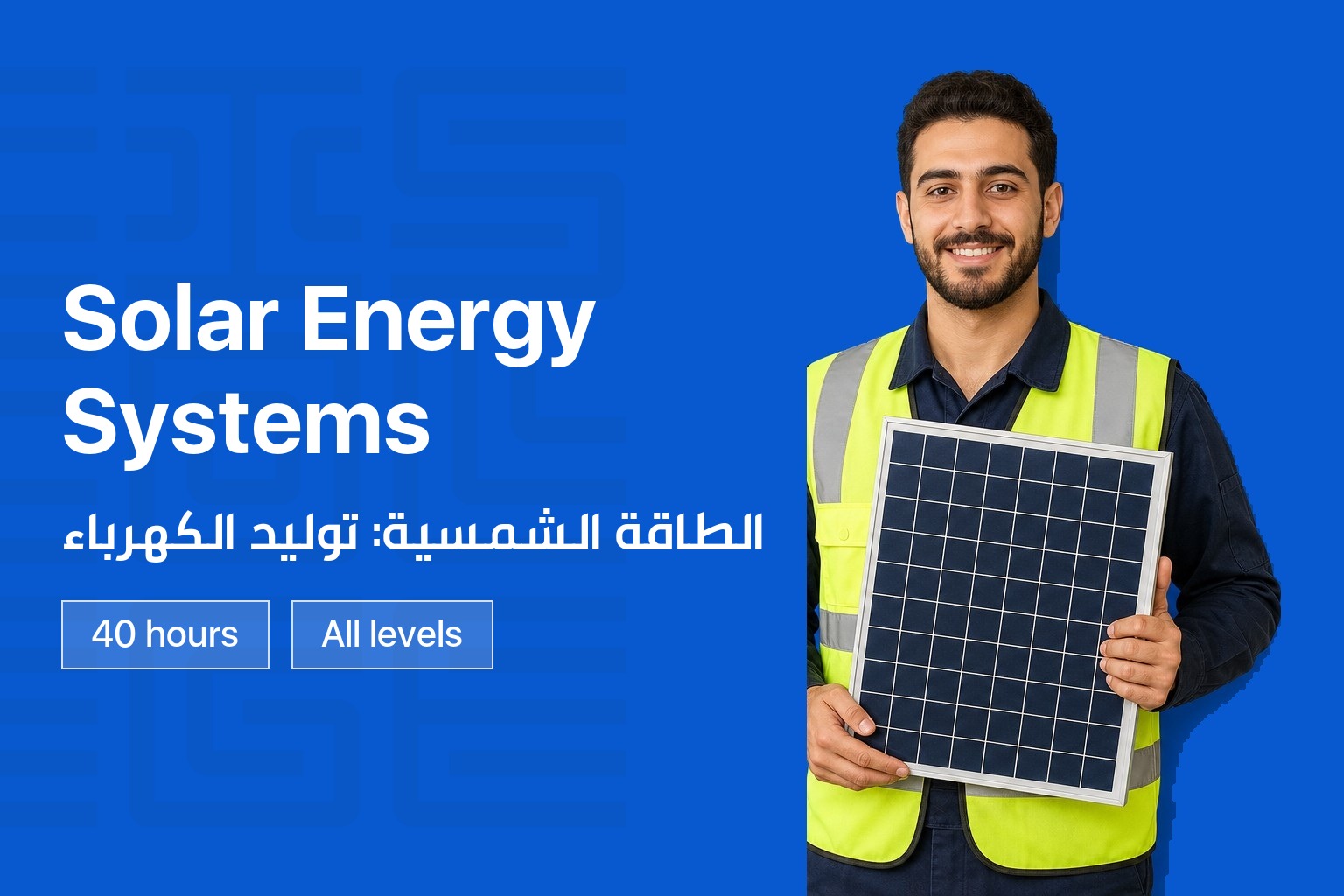
The Solar Energy Systems course, known in Arabic as Al Taqa Al Shamsiya (الطاقة الشمسية), gives you a complete, hands on grounding in how solar power systems are designed, installed, and maintained. Over 40 hours you will move from core electrical safety and basic electricity through the full range of solar equipment: panel technologies, inverter types, battery banks, wiring, and protection devices.
This is a practical, project based course. You will work through two full system design projects where you calculate loads, batteries, panels, inverter sizing, wire cross sections, fuses, circuit breakers, and surge protection, then program a hybrid inverter and read its fault and warning codes. By the end you will understand solar systems as a working professional would, not just in theory.
What You Will Learn
- Core electrical safety rules and basic electrical concepts (voltage, current, resistance, power, and efficiency)
- The different generations and types of solar panels, their components, and how they connect
- How to size and position solar panel arrays, including base angle and spacing between arrays
- The types of solar inverters (off grid, on grid, hybrid, and pump inverters) and their characteristics
- Battery bank technology, from lead acid and VRLA to lithium, and correct charging practices
- How to size solar wiring and design protection systems (fuses, circuit breakers, disconnect switches, surge protection, and earthing)
- How to program a hybrid inverter and interpret its fault and warning codes
- How to calculate and design a complete solar system through hands on projects
Course Curriculum
| Module | What you cover |
|---|---|
| Safety and Basic Electricity | Safety rules, electrical voltage, current, resistance, power, energy, efficiency, and single and three phase networks |
| Solar Panel Types and Components | Panel generations, monocrystalline, polycrystalline, thin film, and bifacial panels, panel components, data sheets, sun charts, base sizes, angles, and array spacing |
| Solar Inverters | Off grid, on grid (string, micro, central), hybrid, and pump inverters, plus inverter power, voltage, charge regulator technology (PWM and MPPT), and current wave characteristics |
| Battery Banks and Charging | Battery classification, lead acid, VRLA, and lithium battery types, specifications, charging stages, sulfation, and stratification |
| Solar Wiring and Protection | Wire specification and cross section calculation, fuses, AC and DC circuit breakers and disconnect switches, surge protection devices, and earthing |
| Inverter Programming and Fault Codes | Programming hybrid inverters and reading fault and warning codes |
| System Design Projects | Two full design projects calculating loads, batteries, panels, inverter sizing, wire cross section, fuses, circuit breakers, surge protection, and programming |
| Advanced Solar Panel Technology | Equalization, balancing, panel failure modes, shadow effect reduction, earthing systems, and second and third generation panel technologies |
Who This Course Is For
This course suits anyone looking to build a career in renewable energy, whether you are new to the field or looking to formalize hands on solar experience you already have.
Certification
Graduates are eligible for a certificate recognized by the Directorate General of Technical and Vocational Education.
Target audiences
- Anyone looking to start a career in renewable energy and solar installation
Requirements
- No prior electrical or solar experience required
You May Like

Contact us to hear when new training sessions and official majors open for registration.
About us
CIS College delivers practical, career-focused technical and vocational education in Lebanon. We turn hands-on training into real employment outcomes.
Useful Links
Contact us
Follow us