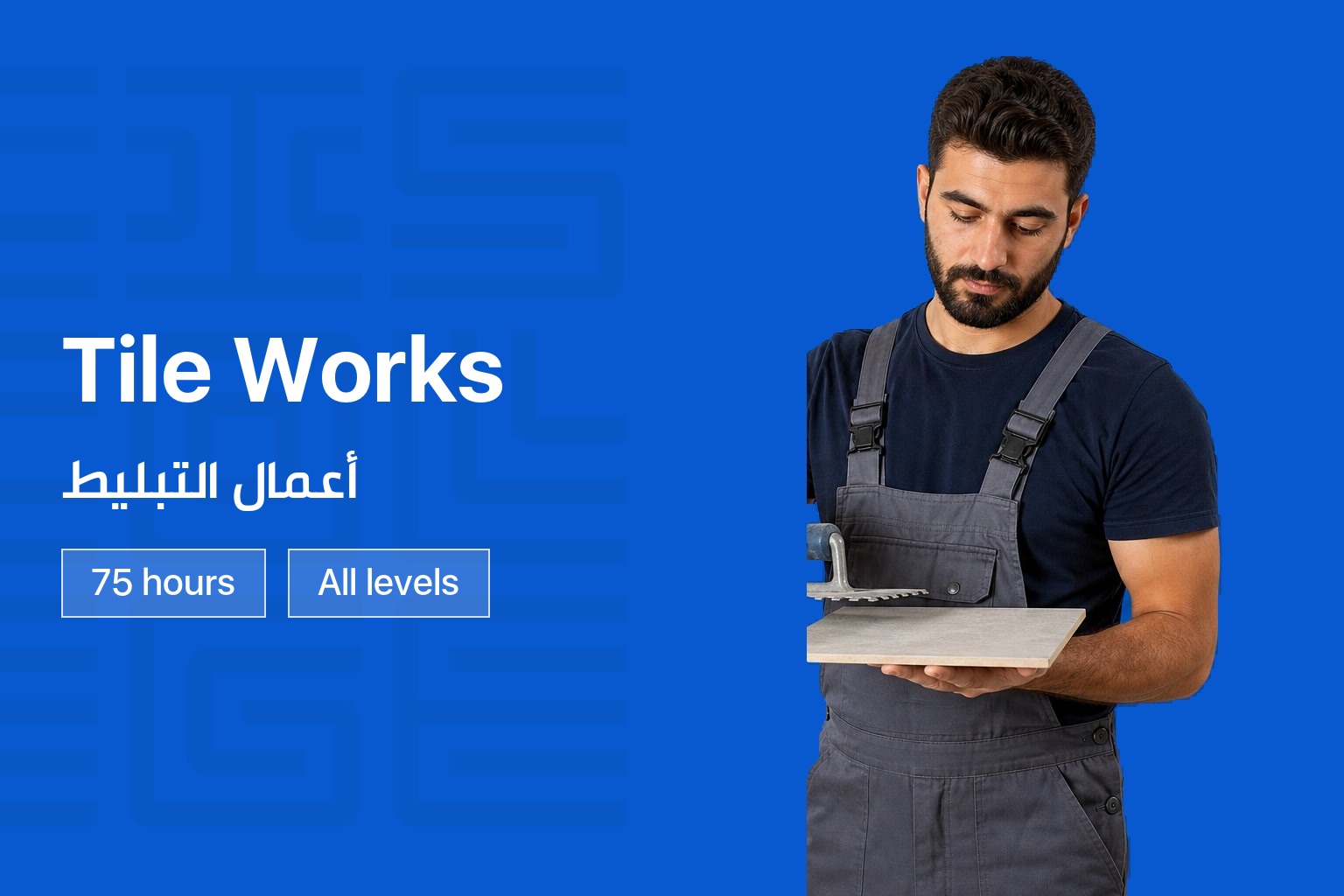
Tile Works
Overview
Tile Works, known in Arabic as “أعمال البلاط” (job title: عامل تبليط), is a 75-hour hands-on program that prepares students for professional work as tile installers. The training combines theory with practical exercises on mock surfaces, covering safety, surface preparation, tile installation methods, and the correct use of tools and materials. Students practice reading floor plans, measuring and marking layouts, cutting and placing tiles with precision, and preparing cement, adhesives, and curing mixtures to industry standards.
This course follows the CIS 6-month program structure: 75 hours of classroom and hands-on instruction over 3 months, followed by a 3-month supervised internship on live construction sites. During the internship students work under experienced professionals on real projects, building the technical proficiency and problem-solving skills needed to be workforce-ready by the end of the program.
What You Will Learn
- Safety protocols and proper handling of tiling tools and equipment
- How to identify and choose materials, adhesives, and tools for different tile types
- Reading floor plans, taking measurements, and marking layouts accurately
- Cutting and placing tiles with precision while minimizing waste
- Preparing cement, adhesive, and curing mixtures to industry standards
- The differences between wall and floor tiling techniques
- Inspecting tile quality before and during installation
- Solving common on-site challenges in complex tile layouts
Course Curriculum
| Module | What you cover |
|---|---|
| Overview of Tiling Works | Definition and purpose of tiling, areas of application, and the tiling process from preparation to finishing |
| Safety Measurements | Personal protective equipment, safe cutting and mixing practices, handling heavy tiles, and first aid procedures |
| Explanation of Types of Tiles | Ceramic, porcelain, mosaic, natural stone, and glass tiles, and the differences between indoor and outdoor tiles |
| Tiling Method According to Each Type | Wet and dry tiling methods and adjustments for different tile types and surfaces |
| Explanation of the Equipment and Tools Used | Manual and electric cutters, trowels, spacers, spirit levels, grouting tools, and safety gear |
| Fixing Materials (Cement, Adhesive, Mechanics) | Types of cement and adhesives, when to use mechanical fixing, and proper mixing techniques |
| Reading Maps and Measurements | Understanding tiling layout plans, measuring and marking starting points, coordinating with the design engineer |
| Starting Point Marked on Maps | Identifying and marking the first tile position and aligning with reference lines and grids |
| How to Take the Chips | Collecting tile samples for inspection and checking consistency in color and texture |
| Respecting Required Space Between Tiles | Using tile spacers, setting uniform gaps, and allowing for thermal expansion |
| Respecting Required Narratives | Following design patterns or motifs and ensuring layout consistency |
| Making Sure Tiles Are Straight | Using laser levels and chalk lines to check straight edges and aligned rows |
| Difference Between Floor and Wall Tiles | Comparing thickness, texture, and durability, and installation techniques for each |
| Checking Tiles Before Starting Work | Verifying sizes and colors, checking for cracks or damage, and sorting for consistent shades |
| Minimizing Waste and Managing Materials | Techniques to reduce wastage, proper screeding, and efficient cutting and layout planning |
| Cutting Closures and Soles | Tools and techniques for precise edge cuts |
| Preparing Cement According to Standards | Correct cement-to-water ratios, mixing techniques, and curing time and conditions |
| Mixing Adhesives According to Standards | Proportions and mixing techniques, adjusting for tile type, and working time considerations |
| Cement Thickness Under Tiles | Standard thickness requirements and adjustments based on tile size and surface |
| Brushing and Wetting Powder Under Tiles | Applying bonding slurry and sprinkling water to ensure adhesion |
| Calculating Powder Thickness with Clay and Tiles | Measuring total thickness for leveling and balancing layers for an even surface |
| Mixing and Applying Curd | Definition and uses of curd in tiling, and proper mixing and application techniques |
| Using Braces for Uniform Tile Leveling | Types of braces and spacers and ensuring consistent tile heights |
| Carrying Large Tiles Safely | Techniques to avoid breakage and tools for handling large-format tiles |
| Protecting Tiles During Work | Using protective covers and preventing stains and damage from tools |
| Choosing Cement Based on Tile Color | Matching cement color with tiles and preventing visible cement marks |
| Chamfering Tiles at Corners | Tools and techniques for beveling edges for smooth, finished corners |
| Tiling Walls | Vertical tiling techniques, dealing with gravity and slippage, and using temporary supports |
| Cutting Tiles Around Filters | Tools for circular cuts and fitting tiles around obstacles |
| Cutting Tiles at Right Angles | Using tile saws for 90-degree cuts while avoiding cracks and uneven edges |
| Installing Mechanical Tiles | Overview of mechanical tiling systems and step-by-step installation |
| Types of Accessories for Mechanical Tiles | Clips, wedges, leveling systems, and specialized tools for mechanical tile installation |
Who This Course Is For
This program is designed for career changers and job seekers who want to enter the construction industry as tile installers, and for anyone looking to build a professional, hands-on skill with real employment potential.
Target audiences
- Career changers seeking entry into the construction industry
- Job seekers interested in tile installation work
Requirements
- No prior experience required
You May Like





Contact us to hear when new training sessions and official majors open for registration.
About us
CIS College delivers practical, career-focused technical and vocational education in Lebanon. We turn hands-on training into real employment outcomes.
Useful Links
Contact us
Follow us