Wall Plastering Works
Overview
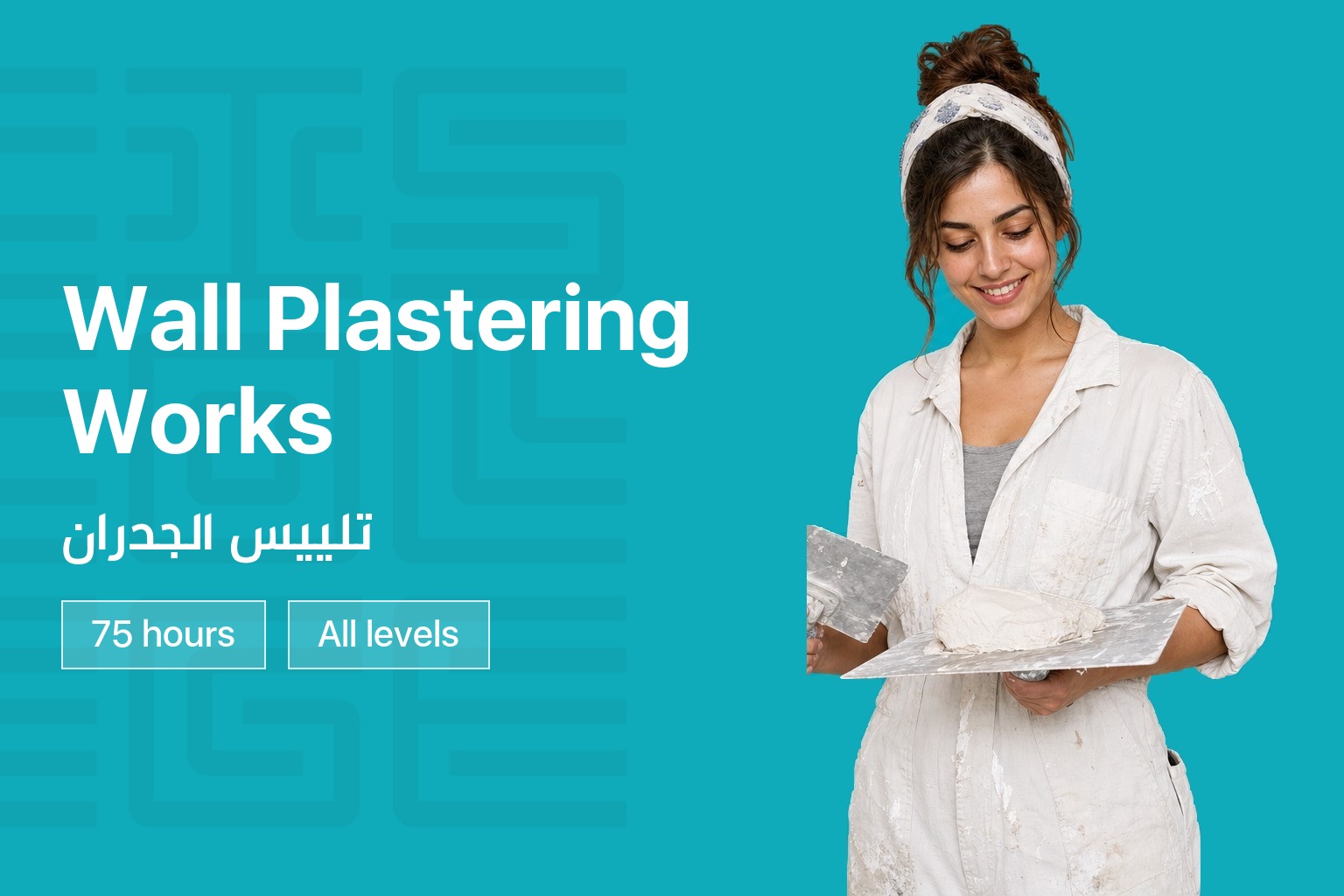
Wall Plastering Works, known in Arabic as “أعمال ورقة” (job title: عامل توريق), is a 75-hour program that gives students a solid, practical foundation in wall plastering. Students learn plastering techniques such as nail spray, scratching, and smooth plastering, along with surface preparation, cement mixing, and specialized methods for corners, joints, and curved walls. Learning is hands-on throughout, so students build the confidence and skill to execute high-quality plastering work.
This course follows the CIS 6-month program structure: 75 hours of classroom and hands-on instruction over 3 months, followed by a 3-month supervised internship. During the internship, students work alongside experienced professionals on live projects, refining their technique and learning best practices for a real work environment before entering the plastering profession.
What You Will Learn
- Safety protocols for handling plastering materials, tools, and the worksite
- The differences between nail spray, scratching, and smooth plaster and when to use each
- How to prepare walls for plastering, including cleaning, priming, and correcting imperfections
- Mixing cement to the correct ratios and standards, including strengthening additives like SBR
- Applying plaster, achieving straight angles, and installing corner beads and mesh reinforcement
- Plastering curved walls and cutting plaster around electrical boxes
- Inspecting finished plaster work for quality and correcting weak points or defects
Course Curriculum
| Module | What you cover |
|---|---|
| Overview of Wall Plastering Works | Plastering as part of construction, types of finishes, key steps, and tools used |
| Safety Measurements | Protective gear, safe handling and storage of materials, and ventilation during work |
| Types of Plaster (Nail Spray, Scratching, Smooth) | Differences between the three plaster types, when to use each, and application techniques |
| How to Prepare Walls for Plastering | Cleaning and priming surfaces, repairing imperfections, and checking wall alignment |
| How to Ensure Right Angles | Using spirit levels, squares, and plumb lines to check and adjust wall angles |
| Cement Mix Standards for Plastering and Adherence to Them | Correct cement-to-sand ratios, consistency, and use of additives |
| Timing for Starting Plastering After Nail Spray Application | Ideal waiting and drying times and the factors that affect them |
| Cement Mix Standards for Strengthening Plaster | Using additives like lime or polymers for high-stress areas and long-term durability |
| Materials to Add to Cement for Strengthening Plaster (SBR) | What SBR is, how it improves bonding and flexibility, and mixing guidelines |
| Scratching the Plaster for Uneven Wall Surfaces | Purpose and technique of scratching plaster to improve adhesion on uneven surfaces |
| Methods for Protecting Floors and Surroundings During Work | Covering floors and fixtures and cleaning up after plastering work |
| How to Apply Cement to the Wall | Trowel technique for smooth, even cement application without air pockets |
| Duration to Wait Before Starting Plaster Removal (Scraping) | Judging drying time and readiness before scraping plaster |
| Refilling Gaps After Scraping the Plaster | Identifying and fixing gaps or uneven areas for a smooth finish |
| Burnishing the Plaster for Smoothing | Burnishing technique and tools for a polished, high-quality finish |
| How to Achieve Straight Angles | Installing corner beads and using tools to achieve sharp, clean angles |
| Installing Mesh (Iron or Fabric) on Joints to Prevent Cracking | Types of mesh and step-by-step installation on wall joints |
| Installing Corner Beads on Wall and Column Angles and How to Secure Them | Techniques for securing corner beads for durable, straight edges |
| Installing Plaster Stop for Hidden Supports | Installing plaster stops in concealed areas for clean, neat finishes |
| Scratching Plaster When Stone Cladding is Installed on Walls | Preparing plaster for stone cladding and ensuring proper adhesion between layers |
| How to Plaster Right Angles (Corners) | Techniques for plastering smooth, precise internal and external corners |
| Plastering Curved Walls | Adapting plaster mix and tools for even coverage on curved surfaces |
| How to Cut Plaster Around Electrical Boxes | Measuring, marking, and cutting precise openings around electrical fixtures |
| How to Inspect and Approve the Plaster Work | Checking smoothness, adhesion, and uniformity for final quality assurance |
| How to Identify Weak Points in the Plaster | Identifying cracks, bubbles, and uneven surfaces and applying corrective measures |
Who This Course Is For
This program is designed for career changers and job seekers who want to become professional wall plasterers, gaining a practical skill with strong employment potential in the construction sector.
Target audiences
- Career changers seeking entry into the construction industry
- Job seekers interested in wall plastering work
Requirements
- No prior experience required
You May Like





Contact us to hear when new training sessions and official majors open for registration.
About us
CIS College delivers practical, career-focused technical and vocational education in Lebanon. We turn hands-on training into real employment outcomes.
Useful Links
Contact us
Follow us