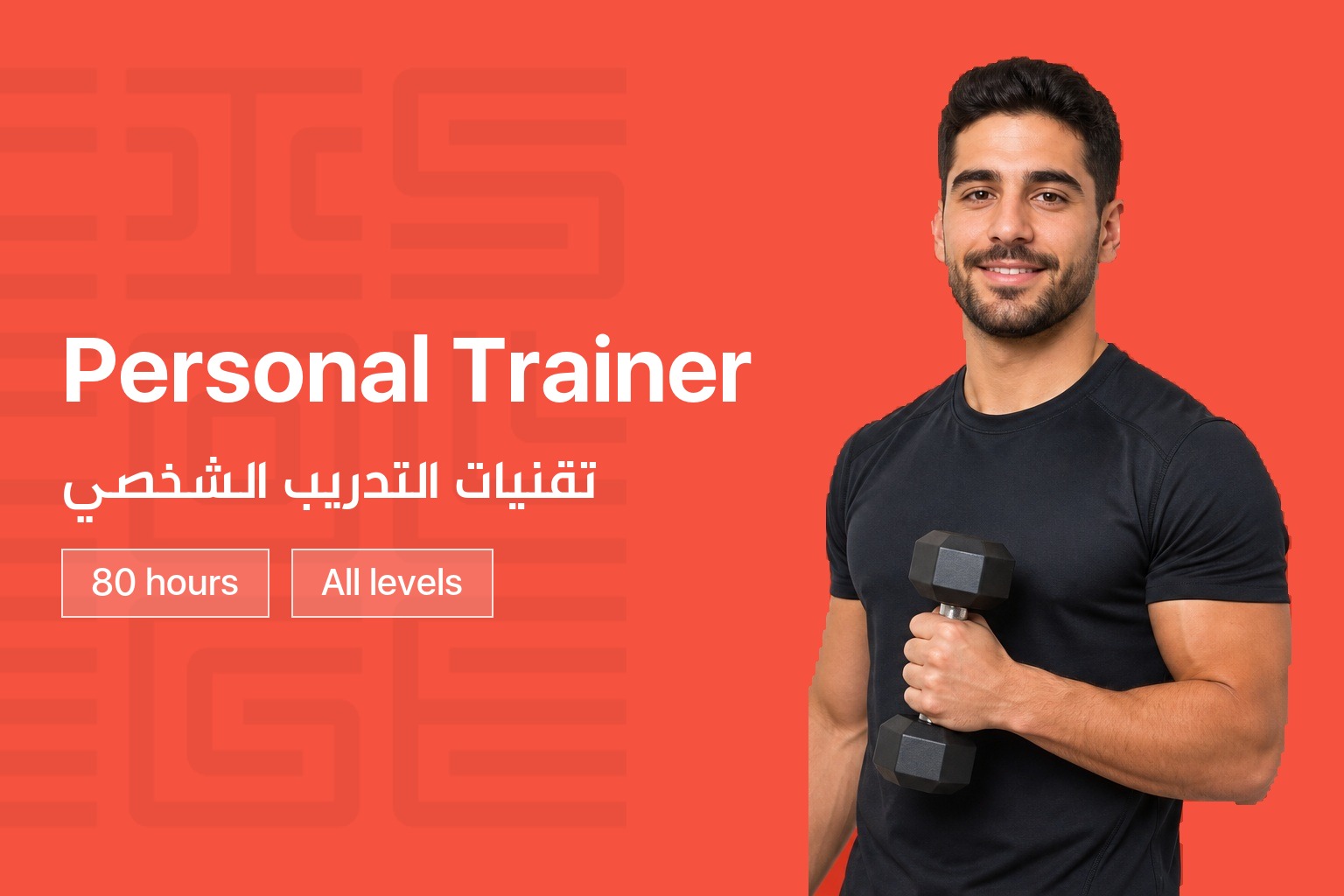
Personal Trainer
Overview
The Personal Trainer course prepares coaches and fitness enthusiasts to design and deliver safe, effective training programs. Over 80 hours of theory and hands-on practice, you will study the science behind fitness, from anatomy and energy systems to the physical qualities that make up a well-rounded training program, and apply it directly to real exercise technique and program design.
You will learn how to assess a client’s needs, build a training program suited to their goals and body type, coach correct technique on foundational exercises, and advise clients on nutrition, supplements and injury prevention. The course prepares you for a range of paths, from working freelance or in a gym to supporting sports teams, physical therapy clinics or sports nutrition companies.
What You Will Learn
- Explain the role, duties and career paths of a personal trainer
- Apply core anatomy, kinesiology and energy science concepts to training
- Assess and develop the main components of physical fitness
- Design training programs suited to an individual client’s goals and body type
- Coach correct exercise technique for foundational strength movements
- Apply bodybuilding training methods such as supersets and drop sets
- Advise clients on sports nutrition and supplement basics
- Recognize common training injuries and apply basic gym safety practices
Course Curriculum
| Module | What you cover |
|---|---|
| Foundations of Personal Training | Who a personal trainer is, their characteristics and duties, and career opportunities in gyms, as a freelancer, or alongside nutritionists and physical therapy clinics |
| Sport and Training Science | The concept of sport and training, training methods (interval, continuous, repetition, circuit), and the stages, principles and seasons of training |
| Anatomy and Kinesiology | Body anatomy and physiology, movement and energy science, muscle types, structure and grouping |
| Physical Fitness Components | Endurance, flexibility, agility and strength: types, the factors that affect them, and how to develop each one |
| Strength and Muscle Contraction | Types of strength (maximum, explosive, endurance) and types of muscle contraction (isometric, isotonic, plyometric) |
| Exercise Technique | Correct form and the muscles worked in foundational exercises such as the dumbbell squat, push-up, Russian twist and standing dumbbell shoulder press |
| Testing and Program Design | Fitness testing and measurement, training program design methods, and building individualized programs by body type and goal |
| Bodybuilding Training Styles | Super sets, drop sets, giant sets, tri-sets and push-pull-leg splits for training muscle groups |
| Sports Nutrition | Balanced nutrition, meal timing, nutrient sources and sports supplements |
| Injury Prevention and First Aid | Common training injuries and treatment approaches, gym safety and hygiene practices, and first aid basics |
Who This Course Is For
- Aspiring personal trainers and fitness coaches
- Athletes and current coaches seeking a formal training credential
- Gym staff looking to build their coaching skills
Certification
Graduates who complete the course become eligible for a certificate recognized by Lebanon’s Directorate General of Technical and Vocational Education.
Target audiences
- Aspiring personal trainers and fitness coaches
- Athletes and coaches seeking a formal training credential
- Gym staff looking to upgrade their skills
Requirements
- No prior fitness certification required
- Basic physical fitness to take part in practical sessions
- Interest in sports, fitness or coaching
You May Like




Contact us to hear when new training sessions and official majors open for registration.
About us
CIS College delivers practical, career-focused technical and vocational education in Lebanon. We turn hands-on training into real employment outcomes.
Useful Links
Contact us
Follow us