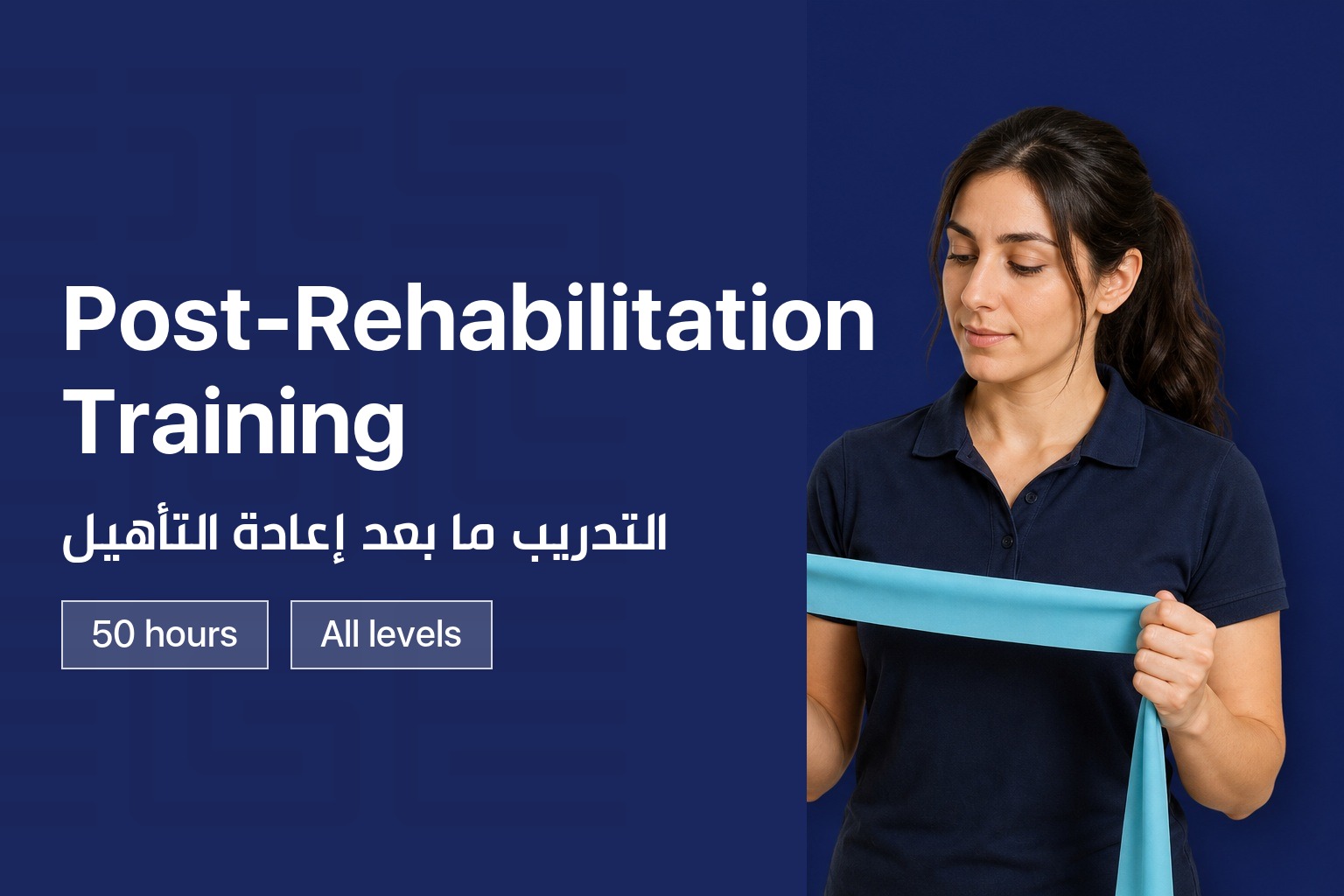
Post-Rehabilitation Training
Overview
The Post-Rehabilitation Training course teaches fitness professionals how to safely guide clients back to activity after an injury. You will learn to recognize common injury patterns, understand the treatment approach behind them, and design exercise programs that support recovery, always working alongside health professionals rather than replacing their care.
The course focuses on practical program design for the injuries personal trainers encounter most often, along with emergency response basics for the gym floor.
What You Will Learn
- Apply basic first aid and emergency response procedures in a gym setting
- Recognize common knee, shoulder and lower back injuries
- Design safe exercise programs for clients recovering from these injuries
- Adapt training programs for pre-natal and post-natal clients
- Adjust programs for special medical cases in coordination with health professionals
Course Curriculum
| Module | What you cover |
|---|---|
| First Aid and Emergency Response | Emergency response procedures for injuries occurring in a gym setting |
| Knee and Shoulder Injuries | Common injuries, treatment approaches and safe program design for knee pain and shoulder pain |
| Lower Back Pain | Common injuries, treatment approaches and safe program design for lower back pain |
| Pre- and Post-Natal Training | Injury considerations, treatment approaches and program design for pregnancy and post-natal clients |
| Special Cases | Treatment approach and program design considerations for special medical cases |
Who This Course Is For
- Personal trainers and fitness coaches working with clients recovering from injury
- Fitness professionals wanting to expand into post-injury training
- Gym staff supporting clients with special conditions
Target audiences
- Personal trainers and fitness coaches working with injured clients
- Fitness professionals expanding into post-injury training
- Gym staff supporting clients with special conditions
Requirements
- A background in fitness or personal training is recommended
- No formal certification required to enroll
You May Like



Contact us to hear when new training sessions and official majors open for registration.
About us
CIS College delivers practical, career-focused technical and vocational education in Lebanon. We turn hands-on training into real employment outcomes.
Useful Links
Contact us
Follow us